|
Los Angeles: Enjoy Non-Stop Family Vacation Fun at the Getty. 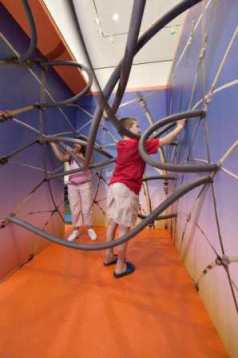 Best described as a class act, the Getty is always rewarding to the senses because the location is awesome and the atmosphere of the complex energizing. It is a blue ribbon spot to be enjoyed. No matter the age of children there are creative ways to engage them allowing parents to share in the fun. Best described as a class act, the Getty is always rewarding to the senses because the location is awesome and the atmosphere of the complex energizing. It is a blue ribbon spot to be enjoyed. No matter the age of children there are creative ways to engage them allowing parents to share in the fun.
Here's the scoop. The first stop is the Family Room at the Getty Center because it offers a fresh approach to experiencing art for kids and their parents. The innovative space is equipped with a unique assortment of discovery "coves" and treasure-hunt walls with specially developed activities and interactive features that allow families to play and learn together. This is a place not-to-be-missed.
In the Family Room, kids can relax and read on a luxurious bed just like an 18th-century French aristocrat, fill in the blank parts of a wall-sized illuminated manuscript page with their own designs, build a tube sculpture inspired by Martin Puryear's installation at the Getty Center, take their place in a parade scene from a James Ensor painting, explore David Hockney's photography with camera lenses and a wall of mirrors, and much more. Then there are the treasure-hunt walls that hug the entire room, with intriguing and unexpected details of over 70 objects in the Getty's collection to discover through peepholes and then hunt for in the galleries.
The redesigned Family Room focuses on a greater range of the Getty's holdings, with each of the five coves concentrating on one area of the Museum’s collection: paintings, drawings and manuscripts, decorative arts, sculpture, and photographs. Families will have the freedom to roam and explore as they like. Together, the activities in the Family Room will allow kids and parents to engage in a hands-on examination of art from the 15th century to the present. It will be an important and fun stop for families visiting the Getty Center.
The Family Room is located in the Museum courtyard adjacent to the East Pavilion. It is open daily during regular Museum hours. Information in the room is offered in English and Spanish.
Family Room Highlights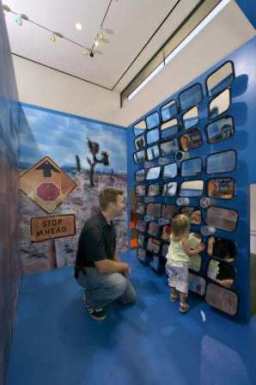
Treasure-Hunt Walls: Compared with the large-scale works featured in the five coves, the treasure-hunt walls encircling the Family Room offer visitors a chance to look at art on a much smaller scale. Covered with nearly 70 peepholes at different heights, the walls invite families to take a closer look at details of works from the Getty’s collection. Kids will be encouraged to roam the galleries on a treasure hunt to identify and find some of the artworks spied in the peepholes.
Paintings cove: The paintings cove features a translucent, almost life-sized reproduction of James Ensor's Christ's Entry into Brussels in 1889 (1888), with holes cut at various heights for families to insert their faces into the crowd in Ensor's work. There will also be a mask-making station. Kids will experience Ensor's fascination with masks and surrealistic distortion by creating their own masks and then placing themselves within Ensor's composition of a crowded parade scene.
Drawings and Manuscripts cove: This cove features one drawing and one illuminated manuscript from the Getty’s collection. Families will be invited to look closely at an enlarged reproduction of Jan van Kessel's Butterflies, Insects, and Currants (about 1650–1655) and trace smaller reproductions of the artist's drawings of specimens that are embedded in a light table. The opposite wall of the cove features a large-scale image of an illuminated manuscript page from a prayer book created around 1420, with some areas of text and image left blank. Visitors will be able to fill in the missing portions of the manuscript with their own words and designs using erasable markers. A facsimile of the actual miniature manuscript is embedded in the wall and viewable through a glass window to give families a sense of the scale at which medieval manuscript illuminators worked.
Decorative Arts cove: The cove dedicated to decorative arts features a cozy space inspired by Bed (Lit à la Polonaise), made in France around 1775–1780, now in the Getty's collection. Families can climb into bed, feel the sumptuous fabric, touch the luxurious bolsters, and get a taste of what life was like for a French aristocrat in the 18th century. While relaxing in luxury, parents and kids can also read books about beds across time, place, and culture.
Sculpture cove: The sculpture cove is based on the work of sculptor Martin Puryear, whose 45-feet-tall installation That Profile (1999) can be seen on the tram arrival plaza of the Getty Center. Lightweight and bendable foam tubes are made to fit into a grid of holes in the three walls of this cove, enabling families to create large-scale sculptural forms. To lend context and inspiration, a large-scale photograph of Puryear's work will be spread across the three walls. The holes extend from ankle level all the way up to the height of an adult arm's reach, encouraging families to collaborate in the building process.
Photographs cove: The cove focused on photographs allows visitors to step into David Hockney's Pearblossom Hwy., 11–18th April 1986, #2, a photographic collage. One wall features a mosaic of rear-view type mirrors that can be adjusted. Opposite the mirrored wall is a large-scale reproduction of Hockney's work, so that families can see themselves, fragmented and distorted, inside the manipulated Pearblossom highway scene. On the outer wall of the cove, different photographic lenses trained on Hockney's work enable families to experiment with viewing as a photographer might.
Need to know: 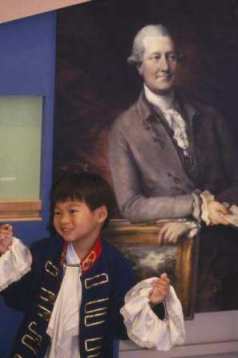 The Getty is known for innovative programs for families. From “Art Adventures” to storytelling each program is engaging and worth every minute. This is the perfect place to introduce children to art and have fun doing it. Editor's note: Admission is free but it is very important to call for a parking reservation. Space is limited and going to the Getty is a very popular springtime outing. It is a terrific place to go with young children because it is not an overwhelming and therefore children do not become distracted. The villa is an architectural beauty that creates the perfect atmosphere for appreciating art. The gardens, though small by comparison, are as enchanting as Hampton Court. The Getty is known for innovative programs for families. From “Art Adventures” to storytelling each program is engaging and worth every minute. This is the perfect place to introduce children to art and have fun doing it. Editor's note: Admission is free but it is very important to call for a parking reservation. Space is limited and going to the Getty is a very popular springtime outing. It is a terrific place to go with young children because it is not an overwhelming and therefore children do not become distracted. The villa is an architectural beauty that creates the perfect atmosphere for appreciating art. The gardens, though small by comparison, are as enchanting as Hampton Court.
Always thinking out of the box: The Getty has partnered with Pasadena-based Numedeon, Inc., a specialist in Web-based educational communities, to bring the Getty Museum to the virtual world of Whyville (www.whyville.net). The award-winning site for children has over one million "citizens," mostly between the ages of 8 and 14, who gather from around the world to learn, create, chat, and have fun together. This partnership brings art games based on the Getty’s collections into Whyville, which originally focused primarily on science. Located in Whyville’s town square, the virtual Getty Museum is the first cultural institution in the online city. Bonus points: The two interactive games at the virtual Getty Museum are designed to be fun as well as educational, a hallmark of the Getty’s work with children over the years. ArtSets is a quick match game that teaches players about art media and subjects, sharpening their thinking skills along the way. In the Art Treasure Hunt, players are shown works of art and given clues to a historical period and place related to the object. Whyvillians are encouraged to link to the Getty Web site at www.getty.edu to do research. Once they find the location and date answers, players arrange the pieces chronologically to find out which city they have to visit first. Then it is off to the Whyville airfield and the Warp Wagon to circumnavigate the globe to find and collect the works of art.
Visiting the Getty Center: The Getty Center is open Tuesday through Thursday and Sunday from 10 a.m. to 6 p.m., and Friday and Saturday from 10 a.m. to 9 p.m. It is closed Mondays and major holidays. Admission to the Getty Center is always free. Onsite parking is available for a fee; no reservation is required. Reservations are required for event seating and groups of 15 or more. Please call 310-440-7300 (English or Spanish) for reservations and information. The TTY line for callers who are deaf or hearing impaired is 310-440-7305.
The Getty Center. 1200 Getty Center Drive Los Angeles, CA 90049–1679. 1(310) 440-7300 or www.getty.edu
About the Getty: The J. Paul Getty Trust is an international cultural and philanthropic institution devoted to the visual arts that includes the J. Paul Getty Museum, the Getty Research Institute, the Getty Conservation Institute, and the Getty Foundation. The Getty Trust and the Getty programs are located at the Getty Center in Los Angeles.
Comments provided by Familytravelfiles.com and image provided by Getty Center. Updated 2014
|
