Earth Friendly Family Vacation Fun - Take a North American Wildlife Safari at a National Wildlife Refuge.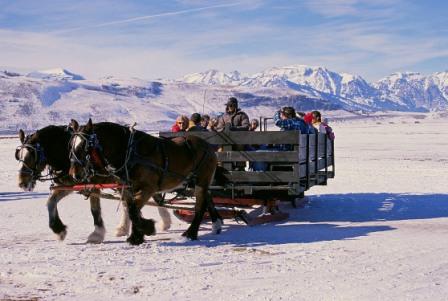
National wildlife refuges offer families terrific family vacation possibilities for hiking, camping and to observe wild animals in their natural habitats.
Sleigh rides amidst thousands of elk wintering in Wyoming; trolley tours of bison roaming newly restored prairie in Colorado; a drive along lakes and marshes in Florida where alligators are commonly seen. These are just some of the opportunities national wildlife refuges offer visitors who want to see charismatic wild animals in their natural habitats.
Here's the scoop. The National Wildlife Refuge System offers a host of opportunities for outdoor recreation—especially the chance to see wildlife up close, without crowds of tourists. Refuges are often just an hour’s drive from most major cities and there is at least one in every state. Here is a sampling of ideas for a North American viewing safari:
Wyoming: Jackson, Enjoy a Sleigh Ride with Elk. For those who love the snows of a Wyoming winter, horse-drawn sleigh rides provide an intimate view of elk on the National Elk Refuge near Jackson. Some 8,000 elk—the world’s largest wintering concentration—descend from Grand Teton and Yellowstone national parks and other surrounding forest areas to pass the winter on the national wildlife refuge.
The refuge, created in 1912, was one of the first big game refuges established as a result of public interest in the survival of the Jackson elk herd. Today, the refuge continues to preserve much of the elks’ remaining winter range in the valley, approximately one-quarter of the original Jackson Hole winter range. Moose, bison and bighorn sheep also roam the refuge in winter, although catching a glimpse of one is more challenging. Season sleigh rides are scheduled daily from December to April but if snow is sparse, wagons substitute for sleighs. For more information and a virtual sleigh ride visit
www.fws.gov/nationalelkrefuge/Index.htm Washington: Columbia River – See Endangered Columbian White-Tailed Deer. rive on the Julia Butler Hansen National Wildlife Refuge near the Columbia River in Washington at dusk or dawn, and you may catch sight of the endangered Columbian white-tailed deer, a subspecies of white-tailed deer.
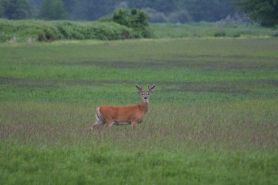
The refuge, located in Washington and Oregon, was created in 1972 specifically to protect and manage the endangered Columbian white-tailed deer. They are easiest to spot in winter, when grasses are lower and they are more likely to be out mid-day. There are now about 300 deer on the refuge, and another estimated 300 on neighboring lands. While the subspecies differs genetically from other white-tailed deer, it looks the same, said refuge manager Joel David. For more information on visiting the refuge, see
www.fws.gov/jbhMinnesota: Tamarac and Agassiz - Listen to Elusive Wolves. Elusive grey wolves live on two of the northernmost wildlife refuges in Minnesota: one wolf pack on the 61,500 -acre Agassiz National Wildlife Refuge and two packs on the 42,724 -acre Tamarac National Wildlife Refuge.
While the wolves are difficult to spot, Visitor Services Manager Kelly Blackledge suggests that the best time to see them—or at least their footprints or scat—is winter. “You'll sometimes see them crossing the lakes on the ice. They're easier to see when there are no leaves on the trees and so there is more open viewing,” she said.
White-tailed deer are much easier to see than wolves on both refuges. At Tamarac Refuge, they often graze along the entrance road. For locations and visitor information on Tamarac visit
www.fws.gov/midwest/tamarac/ and for Agassiz visit
http://midwest.fws.gov/agassiz Florida: Apalachee Bay – Find Alligators Aplenty. It’s unusual not to spot an alligator on St. Marks National Wildlife Refuge in Florida. Visitors are likely to catch sight of one on the 6.8-mile wildlife drive that runs from the Visitor Center to the historic St. Marks lighthouse on Apalachee Bay. Boating on some of the lakes and estuaries on the 68,000-acres refuge or hiking one of its many trails may also provide a peek at the alligators, which can grow to be 14 feet long.
While not as commonly seen as the alligators, the Florida black bear is also making a strong comeback on the refuge, says Refuge Ranger David Moody. “Alligators are pretty close to a given. I see bears about every six weeks,” he estimates. Find out more about St. Marks Refuge online at
www.fws.gov/saintmarks/ Colorado: Denver - Watch Bison on the Colorado Range. When the Rocky Mountain Arsenal National Wildlife Refuge in Colorado reintroduced bison on the refuge in March 2007, visits to the refuge swelled -little wonder. The refuge is just 11 miles from downtown Denver, and surrounded by suburban neighborhoods and Denver International Airport. It offers two-hour wildlife viewing tours on a trolley bus at 10 a.m. Saturdays, Sundays and Wednesdays.
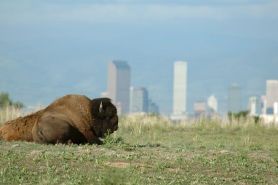
“Just about anybody on the tour has the opportunity to see the bison,” says Sherry James, visitor services manager. “Sometimes they’re very close. If we can’t see them from outside of their fenced enclosure, we go into their pasture.”
Bison are North America’s heaviest land mammal. Bulls are about 6 feet tall at their shoulder hump and weigh up to 2,400 pounds; cows weigh up to 1,000 pounds and stand 5 feet tall. In the early 1800s, tens of millions of bison blanketed the Midwest and western plains. By the end of that century, they were nearly decimated by sport shooting and habitat loss.
The herd reintroduced at Rocky Mountain Arsenal has grown from 16 to 24 bison. In the long term, the refuge plans to expand the herd to 250 and to continue restoring short grass prairie habitat to cover much of the 17,000-acre refuge, James says. Wildlife viewing tours are free, but reservations are required. For information or reservations, call (303) 289-0930. For information about Rocky Mountain Arsenal Refuge visit
www.fws.gov/rockymountainarsenal/
Maine: Aroostock - Hike in Moose and Bear Country. Aroostock County, Maine, claims to have the densest population of moose and black bears in the lower 48 states, and sightings are quite common during May through September at Aroostock National Wildlife Refuge near Limestone.
The largest member of the deer family, moose stand six- to seven-feet tall at the shoulder. Males weigh up to 1,500 pounds, and females more than 900 pounds. They browse on twigs and barks through the winter. In summer, they eat tree leaves, sedges, horsetail, pond weeds and grasses, as well as water lilies and other vegetation in shallow ponds. The refuge has about six miles of trails through wetlands, spruce-fir forests, and northern hardwood forests. It is open sunrise to sunset, seven days a week. For information, call 207-328-4634. For more information about Aroostock Refuge, visit
www.fws.gov/refuges/profiles/index.cfm?id=53630 California: Los Banos – See Tule Elk at San Luis National Wildlife Refuge. Prior to the mid-1800s, an estimated 500,000 tule elk lived in California. By the turn of the 20th century, unregulated hunting and loss of habitat nearly caused the extinction of this non-migratory elk species, which is found only in California. In 1974, a herd of 18 animals was established in a 780-acre enclosure at San Luis National Wildlife Refuge near Los Banos. The elk have thrived.
The refuge has a five-mile Tule Elk Tour Route takes visitors around an enclosed herd of approximately 50 tule elk. The tour route is open during daylight hours year-round.
“The cool thing about our elk tour route is that it pretty much guarantees people will see tule elk during their visit,” says Jack Sparks, outdoor recreation planner at San Luis Refuge. Best times to view elk are during calving season in April, and from August to October when the bugling male can be heard for miles around.
The refuge also has a 12-mile waterfowl tour route where visitors can see vast numbers of ducks and geese. A 2 ¼-mile tour route at the West Bear Creek Unit provides an intimate view of waterfowl, shorebirds, and riparian songbirds. On the nearby Merced National Wildlife Refuge tour route, visitors can view thousands upon thousands of sandhill cranes and Ross’ geese. More information is available by calling the refuge at (209) 826-3508 or at
www.fws.gov/sanluis/default.htm About the U.S. Fish and Wildlife Service: The mission of the U.S. Fish and Wildlife Service is working with others to conserve, protect and enhance fish, wildlife, plants and their habitats for the continuing benefit of the American people. We are both a leader and trusted partner in fish and wildlife conservation, known for our scientific excellence, stewardship of lands and natural resources, dedicated professionals and commitment to public service. For more information on our work and the people who make it happen, visit
www.fws.gov Content and images provided by National Fish and Wildlife Service. Copyright 2014. 