 Family Travel Files Ezine Family Vacations Resource Family Travel Files Ezine Family Vacations Resource |
Saskatchewan: Red Coat Trail, a Family Travel Adventure with Mounties, Bison, and Dinosaurs.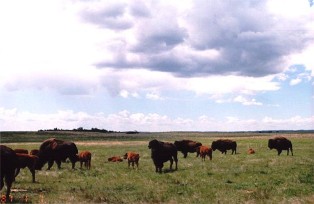 Family road trips have more value when there’s a plan with a purpose and even better with a few surprises along the way. Red Coat Trail offers old forts and black horses, bison herds and seas of grass, and perhaps most important – dinosaurs!
Here’s the scoop. Following Highway 13 and provides plenty of stops along the way spanning expansive horizons of the prairies. It crosses and skirts rugged terrain from the Big Muddy Badlands through the picturesque Frenchman River Valley. Some of the landscape appears relatively unchanged, save for the highway markers along Highway 13. Along the way you will find living history, panoramic views, ancient dinosaur bones, bison herds, friendly residents, and of course – luscious Saskatoon berry pie.
Visit “Red Coat” headquarters. The Royal Canadian Mounted Police Academy, located in Regina 9about two hours north of Hwy 13), is essential for families interested in the Red Coats. In addition to being an active federal police training facility, on site is the regimental museum of the Mounted Police (RCMP) a storehouse of history about the organization and Red Coat Trail. Tour guides explain that in 1873 when the North-West Mounted Police was established, Queen Victoria was the reigning monarch; Mark Twain was writing Tom Sawyer; and Canadians were settling on the frontier. The academy is military-like in atmosphere and cadets may be seen running between buildings oblivious to visitors. Bonus points: During the week, the colorful Sergeant Major's Parade is held mid-day in front of the Museum. (Regina. 1-777-RIDE (7433) or www.rcmpheritagecentre.com)
Trespassers will be given a fair trial-then hung. Highway13 is a ribbon of visual drama with expansive skies capping ever changing landscape. Nice for adults, not ideal for kids so plan to have a little audio entertainment – cowboy stories will work. Drive through the badlands, west of Weyburn. The terrain is desolate. Residents recount stories of outlaws and intrigue. Historically the Big Muddy Valley was a safe haven for outlaws like Dutch Henry, horse thief and cattle rustler and the Jones-Nelson gang notorious stagecoach robbers. Visitors may tour the famous Sam Kelly Outlaw Caves. Bonus points: Each September Coronach hosts an Outlaw Days Festival, to celebrate the history of the people who settled that area 100 or more years ago and brought with them their diverse music, dance and story-telling heritages. Wait for it! It is believed that Chief Sitting Bull, Crazy Horse and 700 plus Indian braves camped on the buttes in the area. (Big Muddy Tours. Coronach, S0H 0Z0. (306) 267-3300 (May-October) or www.townofcoronach.com)
Look into the past. Not far south of Highway 13 a dramatic window to the past signifies the timelessness of the prairie. Ancient Indian rock carvings may be viewed on top of a sandstone outcropping overlooking the adjacent valley. This location has one of only two petroglyphs in North America that depict humans with teeth. Bonus points: During certain nights in the summer flashlight tours are conducted. (St. Victor Petroglyphs Historic Park, (306) 694-3659 or 1-800-205-7070 (Saskatchewan only). The park is 5 miles south of Victor. stvictor.sasktelwebsite.net)
Walk through a sea of grass. Along the U.S. Canadian border, Grasslands National Park preserves a wide expanse of the broad Frenchman River Valley. Along with weathered buttes and badlands, untouched native prairie, and grassland flora and fauna, the rolling terrain appears today much like it did when the Mounties passed heading west. The park is pristine and tranquil; the land is covered with tiny cactus flowers and sage; and grasses blowing in the wind caress prairie dog towns. Arrowheads, teepee rings, medicine wheels, and bison jumps indicate that the Plains Indians lived in the area for centuries. Guides at the Visitor Centre in Val Marie explain it was also a favorite bison hunting area for the nomadic Métis, during the early days of the Red River Settlement. Wait for it! Sitting Bull took refuge in the area after the battle of the Little Bighorn in 1876. Subsequently The North West Mounted Police and European settlement followed. (Grasslands National Park of Canada, Val Marie, S0N 2T0. (306) 298-2257 or www.pc.gc.ca) 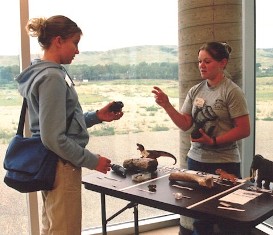
Go west to Eastend to the dinosaurs. The North West Mounted Police named the town site because it was their most eastern outpost location within the Cypress Hills. Today it is the site of a world-class museum of paleontology, T. rex Discovery Center. Carved out of the hillside on the north side of town overlooking the Frenchman River Valley, it provides an amazing window to 75 million years ago. Visitors may observe paleontologists working on fossils collected from southwest Saskatchewan and see Scotty”, the Tyrannosaurus rex discovered in the area. During the warmest months it is also possible to visit the active dig sites used by paleontologists and their crews. Wait for it! There is an active Day Dig Program that allows novices to take part in the fun of discovering fossils. Not to be missed: Do not leave Eastend without eating at Jack's Café known for internationally famous pizza. The pie is not bad either. (T. rex Discovery Centre, Eastend, S0N 0T0. (306) 295-4009 or www.dinocountry.com)
Visit the old Fort Walsh. In the tranquil Cypress Hills that border Alberta, old Fort Walsh stands as a reminder of the treachery in the frontier. Living history programs depict the struggles and the victories the red-coated Mounties. Guided tours of the fort's buildings, the Fort Walsh town site, two cemeteries and a reconstructed whiskey trading post are available during warm weather months. 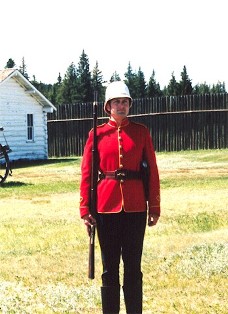 In 1875 Fort Walsh was once the largest and most heavily armed fort the North West Mounted Police garrisoned during their early years. The story of Fort Walsh is filled with legends and larger-than-life characters. Names include Sitting Bull; James Walsh; Big Bear; James Macleod; Sam Steele; John A. Macdonald; and George Armstrong Custer. Bonus points: Sometimes it is possible to plant a seedling during your stay. Check at the park entrance for details. Wait for it! Costumed interpreters lead a variety of children's activities that include making a pillbox hat, marching drills, establishing a NWMP day-camp on the original parade grounds beading, and frontier relays races. (Fort Walsh National Historic Site, South of Maple Creek, S0N 1N0. (306) 662-2645, 662-3590 or www.pc.gc.ca)
Red serge and black horses! Representing tradition and ceremony through the horse and the scarlet uniform, the RCMP Musical Ride is a tribute to history and a salute to peace keeping. Each year the RCMP Musical Ride tours throughout Canada, the United States and other international venues, performing at approximately forty to fifty locations between the months of May and October. (For details www.rcmp-grc.gc.ca)
Make it happen. For more family vacation ideas check out www.sasktourism.com
Reference: Macleod, R.G. The North-West Mounted Police and Law Enforcement 1873-1905. Toronto: University of Toronto Press, 1976.
Baker, William. The Mounted Police and Prairie Society 1873-1919. Regina: Canadian Plains Research Center, 1998.Beahen, William and
Stan Horrall. Red Coats on the Prairies: The North-West Mounted Police, 1886-1900. Regina: Centax Books, 1998.
Content researched and written by Nancy Nelson-Duac, Founder & Editor for FTF (based on a road trip with her teen.) Updated copyright 2013.
|
