 Family Travel Files Ezine Family Vacations Resource Family Travel Files Ezine Family Vacations Resource |
Destination Inishmore - A Day Trip to Ireland’s Aran Islands. From the Cliffs of Moher it is often possible to see the - Inisheer, Inishmaan and Inishmore - the enchanting Aran Islands without binoculars. The distance makes them seem mystical, a secret place to visit on a day away from Galway City. 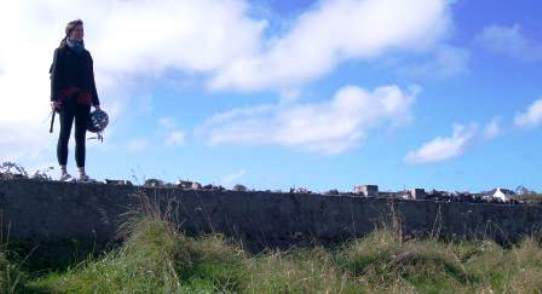
Here’s the scoop. Beginning with the first ferry from Galway City to Inishmore (Inis Mór), the largest island, our day trip was crazy-fun, a little weird, inspiring, and exhausting. Our plan was to rent bikes and see the sights like almost everyone else we met once onboard. At the landing dock we found plenty of bike vendors willing to meet our needs. The rentals run about 10 euro each including a helmet. With maps in hand, parkas zipped up, and water bottles filled we set off intent on making our own discoveries. One important note: Make certain to verify the ferry return schedule which changes not just by season but based on weather. Overnight options while available are limited.
Like most of Ireland, Inishmore is poluated by helpful residents with smiling faces. It is at least for visitors a happy place. The island is textured stone walled fences, and one-lane roads punctuated by quaint Irish cottages, sheep grazing, assorted ruins, small pubs, and beautiful parish churches. On the island livestock run free, meaning watch out for the sheep, goats, chickens, and an occasional guinea. Just for the record we never saw a slekie. 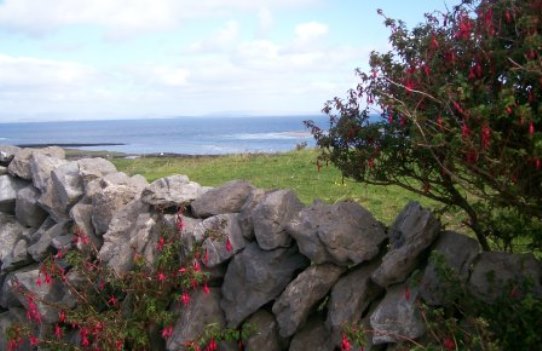
The island of Inishmore was not made by Disney – it is the real thing - similar to Prince Edward Island, truly family friendly and worth sharing. Like most of Ireland, it is ideal for active families who enjoy discovering nature, hiking pathways, wading in tidal pools; wandering among ancient ruins, listening to island folklore, sampling fish n’ chips, brown bread and carrot cake, or just chilling out together.
One stop tells the story. Just outside of the village of Kilronan is The Aran Island Heritage Centre (Ionad Arainn). For first timers it the best place to get useful information relating to culture, customs, arts and crafts, history, and the language of the Aran Islands. The displays and exhibits depict the uniqueness of Aran Islands from currachs (a traditional rowing boat) and hookers (the traditional fishing crafts) to cloth making and woolen sweaters. Discovery: Nowhere else on the planet do Mediterranean, Arctic, Alpine and Temperate plant varieties grow in the one habitat. Bonus Points: The classic film, 'The Man of Aran' by Robert Faherty is shown daily and is included in the admission price. 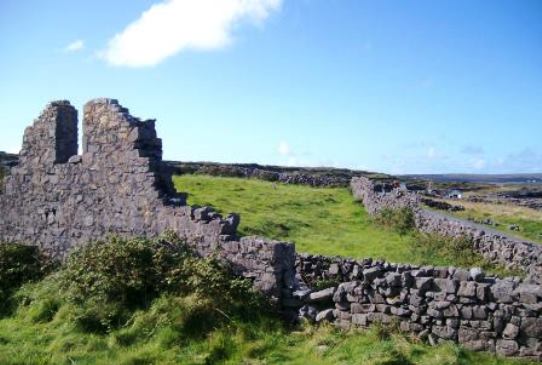
About half way around the island we found the Dun Aengus Cultural Center Tea Room. Our stop before heading to the ruins included a cup of tea (of course), brown bread, and scrumptious carrot cake.
Dun Aengus – A view from the top. The most famous ruin on Inishmore is Dun Aengus (Dún Aonghasa) dating back more than 2000 years. Dun Aengus is perched a cliff towering more than 300 feet above the Atlantic. The complex of ruins spans 14 acres and comprises of three concentric walled enclosures ending at the sea. So like the rest of Ireland, Dun Aengus is shrouded in legend and myth. It is often described by historians as the most magnificent barbaric monument in Europe. Bonus Points: From March to November it is possible to hire a pony trap with driver for an island trip between the port of Kilronan and Dun Aengus. Round trip cost run between 60 and 100 euro for up to four people. One important note: This is not the place to take toddlers, young children, or reckless teens because there are no guard rails along the edge and the wind it very powerful.
Look for the Worm Hole. Along the coast not far from Dunn Aonghasa and the village of Gort na gCapall is a natural pool dubbed the Worm Hole because of the way the sea ebbs and flows at the bottom of the cliffs. It is cool and sort of mysterious because of the selkies in island lore.
Dùn Dùbhchathair – The Black Fort. While not as popular as Dun Aengu, it is very interesting in its own right. It is also located on the edge of a high cliff but on the southern side of the island and is said to have been built between 200 BC -500 AD and remained occupied until the 10th century. The site like Dun Aengus also has defensive razor sharp stone walls known as “chevaux de fries” protecting the remains of interior stone houses.
Dunn Aonghasa - Film on the beach. Anyone who has biked around the island will have one or more favorite beach spots - most of the year the water is too cold for anything but beach walking and wave watching. My connection with theatre and film attracted me to one specific beach spot northeast of Dunn Aonghasa. The beach near the village of Kilmurvy was made famous by the Irish documentary film ‘Man of Aran’. The tide pools are filled with creatures and the rock formations made for Hollywood. Bonus Points: The thatched cottages built for the film are located near beach and have been reborn as a B&B with a restaurant.
Take home your own gansey. It is worth making the trip to Inishmore just to get a one-of-a-kind Aran hand knit sweater or 'gansey', a wearable symbol of the islands. The beautiful sweaters with their intricate patterns each tell a story and symbolize phases of life, connections to the earth, and strength. Basically each sweater tells a story – how Irish. 
About the Aran Islands. I can only speak specifically about one - Inishmore (Inis Mór). The island is small in square miles (about 7 miles long by nearly two miles wide) but saturated with Irish lore, history, traditions and language. Irish (Gaeilge) is still spoken so Cromwell and his henchmen did not win. The largest port is Kilronan (Cill Rónáin), the place where the ferry boats dock. The trip by boat from Galway City docks takes about 90 minutes, From Ros a Mhil (Rossaveal) in Connemara it takes between 35 / 40 minutes and from s), Doolin in Co. Clare only 20 minutes.
Aran Islands Tourism. Inishmore is a secret place worth sharing with children for a day or a week. I am certain anytime spent on the island will be memorable and rejuvenating. Details at www.visitaranislands.com Ireland West Tourism Information Centre. A resource to book tours, book ferry crossings, and exchange money. On Foster Street. +353 91 537700 +353 91 537700 or www.irelandwest.ie
Content and images by Jule Nelson-Duac, actor and teacher who spent five months living in Ireland. Copyright updated 2017.
|
