|
Aruba:
Oranjestad, Family Vacation Ideas - SNUBA, Windsurfing, and an Ostritch Farm.
Warm sea breezes,
beautiful beaches and consistently comfortable weather make the island ideal for
a family vacation. But sun, surf and sand are not the only things Aruba offers
families. It's variety of activities and cultural attractions make it a great
escape. From windsurfing, diving, and sailing to hiking, horseback riding, and
4x4 safaris your vacation days will be filled with fun. Enjoy a day of
snorkeling, take a submarine ride or practice your tennis swing. You will find
something for each member of your family.
It’s always
summer in Aruba.
One of the most southerly islands in the Caribbean in a cluster known as the ABC
Islands, Aruba is located just 12 degrees north of the equator, and only 20
miles off the northern coast of South America. For a relatively small island,
just 19.6 miles long and six miles across at its widest point with a total land
area of 70 square miles; it offers families plenty to do. The Old Dutch capital
city of Oranjestad with its tall multicolored houses is the place to do some
duty free shopping for luxury items, or to browse in the marketplace for Aruban
art and local handicrafts.
Play in the sand.
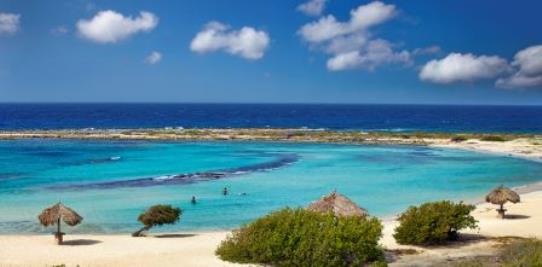
On the southeastern end of the island, in the Seroe Colorado area is Baby Beach
offering calm, shallow waters, making it the ideal spot for families with young
children. Out the water snorklers will love the gorgeous coral reefs, and the
massive sand dunes along the coast are magnificent. Several other ideal beach
spots lie nearby to Baby Beach – check them out, soak up the rays and hit the
waves.
SNUBA anyone?
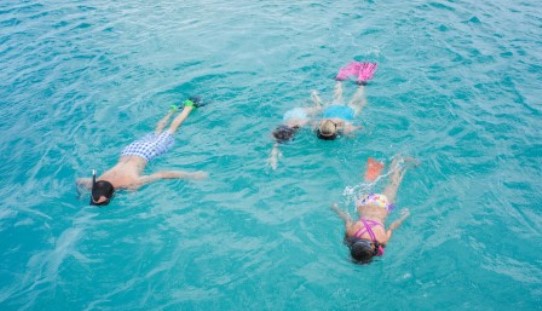
For families not yet ready to SCUBA dive together this is a thrilling option.
SNUBA means SNorkeling+snUBA. Quite simply it is a way to breathe underwater yet
be tethered to one shared air supply. The water is warm and clear and the marine
environment awesome. See blue tang, exotic angelfish and curious clown fish
without the stress of keeping track of kids. Bonus points: It is also
possible to take a Sea Trek which is walking under water using a specially
designed helmet with an air supply system. The helmet allows its user to walk to
a depth of 20 feet.
Seek a private island.
Snorkel heaven, De Palm Island
about
seven minutes by ferry from the mainland. It is a postcard-perfect island with
clean beaches and crystal clear waters which are ideal for snorkeling. Abundant
with spectacular coral formations and colorful marine life, this island paradise
is a "must see" during your visit. Bonus points: The
Blue Parrotfish Water
Park debuts this year on the private island later this year. The
state-of-the-art water park will feature various slides as well as 70 fun-filled
water attractions. (De Palm Tours L.G. Smith Boulevard 142 Oranjestad, Aruba
(297) 582-4400
www.depalm.com)
Ride the wind.
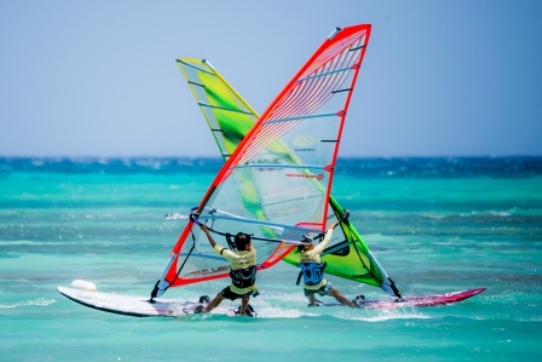
Almost constant 15-knot trade winds, along with the variety of flat-water
locations and challenging wave conditions, have made Aruba one of the most
popular spots on earth for windsurfers and kitesurfers. For families with teens
this is the place to take lessons and practice skills. You will find the gentler
winds, calm waters, rental equipment and instructors along the island's southern
shore. Advanced students and experts have a choice of any number of prime
locations along the northern and southeastern coasts. Bonus points: Each
June, Aruba hosts the Hi-Winds Amateur World Challenge windsurfing tournament.
This ten-day competition attracts the most competitive professional windsurfers
and hundreds of amateurs to the island of Aruba and is sanctioned by the
Professional Board Sailors Association.
Count the coins.
If you have a child who collects coins then this is a stop worth making when one
more hour in the sun will be just too much. The Aruba Numismatic museum holds
the entire private collection of Mario Odor. Today the museum displays more
than 40,000 different pieces from more than 400 countries – some 110 collections
with individual themes: primitive, strange, zoo, proof, counter stamp, over
struck, mini, chop-coins, errors, leprosarium, gold, ration, F.A.O. dollars &
crowns, commemoratives, center holed, scalloped, square, wooden-coins, tokens,
medals, food-coupons and much more. (Located next to the central bus station in
Oranjestad.
www.museumaruba.org)
Walk
on the wild side.
Taking up 18% of Aruba’s total land mass, Arikok National Park is an area of
unique scenic beauty, a multitude of flora and fauna, and the highest point in
Aruba, Mount Jamanota (188 meters). Animals within the reserve include the
indigenous conejo rabbit, Kododo Blauw lizards, and the rattles-less
Cascabel rattlesnake. Numerous trails crisscross the park land, showcasing
au-natural Aruba. Several tour companies offer guided tours of the park.
Bonus points: Look for the Arawak petroglyphs in the Fontein Cave. (
www.arubatravelinfo.com/arikok.html or
www.aruba.com/pages/arikokpark.htm)
Fly
away. Aruba’s
Butterfly Farm is an unforgettable up-close encounter with butterflies in all
their beauty and diversity. The main exhibit is a tropical garden, home to
butterflies from all over the world, as well as some of the world’s most
colorful and unusual creatures. Visitors are invited to observe the life cycle
of a butterfly from egg to caterpillar to chrysalis and finally to butterfly.
Lucky visitors that arrive early may get to witness butterflies emerging from
their chrysalises and taking their first flights. Bonus points: An
admission ticket serves as a free pass for the duration for your stay in Aruba –
visit early and return at no charge. (Palm Beach, toll-free
www.aruba.com/pages/butterflyfarm.htm)
Explore the dark.
With the advent of popular tales of pirates and buried treasure, the
caves of Aruba have gained
significant notoriety. Anyone looking for a feel of Aruba’s swashbuckling
history should check out the caves along the southeast coast. Guadirikiri Cave’s
sunlit main cavern is a wonderful photo op, while the adventurous will love the
100-foot long tunnel, home to hundreds of harmless bats. Although unconfirmed,
it is rumored that Guadirikiri Cave and others nearby were once the hiding place
of pirates. Located in Arikok National Park, Fontein Cave is on of the most
popular on the island. Fontein Cave is the only cave on the island with actual
Arawak Indian petroglyphs along the ceiling. Need to know: The Huliba
Cave is known as the Tunnel of Love due to its heart-shaped entrance. Visitors
to Huliba should bring flashlights in order to fully explore the 300-foot long
passageway. (
www.aruba.com/pages/caves.htm)
Leave it to the birds. The Aruba Ostrich Farm on the dramatically wild,
rugged and beautiful
North Coast
offers a unique opportunity
to interact with tame ostriches; visitors can see and touch and feed the tall
birds; sometimes even have a chance to balance on an ostrich egg. After the
ostrich experience go to the Savanna Lodge, located on the property and try
ostrich dishes. Bonus points: The Lodge also offers a savanna-style cook
out complete with torches and a campfire. (The
ostrich farm is located along the road leading to the Natural Bridge: Matividiri
57. 1 (297) 585-9630 or
www.arubaostrichfarm.com)
Vacation Book
Connection-- Staff Favorites
Jamaican Folk Tales and Oral
Histories.
by Laura Tanna,
DLT Associates, Inc.; (August 9, 2000). This book provides many rare
insights into Jamaica’s culture and unique heritage. This is an excellent
reference for growing young citizens of the world.
Anancy-spiderman.
by James Berry, Walker Books; (July 27, 1989).
Every young child will be enchanted by the folktales of Anancy (Anansi). This
book contains a collection of 20 tales about the antics of the West Indian
trickster and his companions Bro Monkey, Bro Dog, and Bro Tiger. This collection
is ideal for an airport layover or a prelude to naptime.
A
Caribbean Counting Book.
by Faustin
Charles. Houghton Mifflin; (March 3, 1996).
The perfect trip companion for parents with young travelers, this book engages
tykes in the island culture with rhymes and rhythms typical of Jamaica,
Martinique to the Dutch West Indies. Count pawpaws and breadfruit, guava,
centipedes, and fish. This book works really well with the lighthearted A
Caribbean Alphabet by Frane Lessac's. Both create a sense of place for young
children by making them a part of the learning base.
Pirates. By
Dina Anastasio & Donald Cook, Grosset & Dunlap; (March 1, 1997).
This book is both fun and educational. Illustrations on every page create a
sense of what a pirate’s life was like. A replica of the "Pirates’ Code of
Conduct" shows the odd sense of honor among thieves. Elementary school children
will enjoy the examples of pirate flags and the stories about infamous pirates
too. (Ages 5-10)
The Voyager's Stone: The Adventures of a Message-Carrying Bottle Adrift on the
Ocean Sea. By
Robert Kraske & Brian Floca, Orchard Books (NY); (March 1, 1995)
Providing an
unusual and inventive introduction to nature and geography, this
is a clever story that about a
boy who sets adrift a
bottle containing a letter and a special charm. The journey spans from the
Caribbean Sea to Australia. A young girl finds it and replies. The bottle's
journey includes the stresses of nature like waterspouts and tidal waves. (Ages
9-12)
Content
researched and created by Travel Communications Inc. Images provided by Hyatt Regency
Aruba Resort & Casino.
Copyright 2009.
|